Car Wash Quality Consistency: Why It Keeps Members




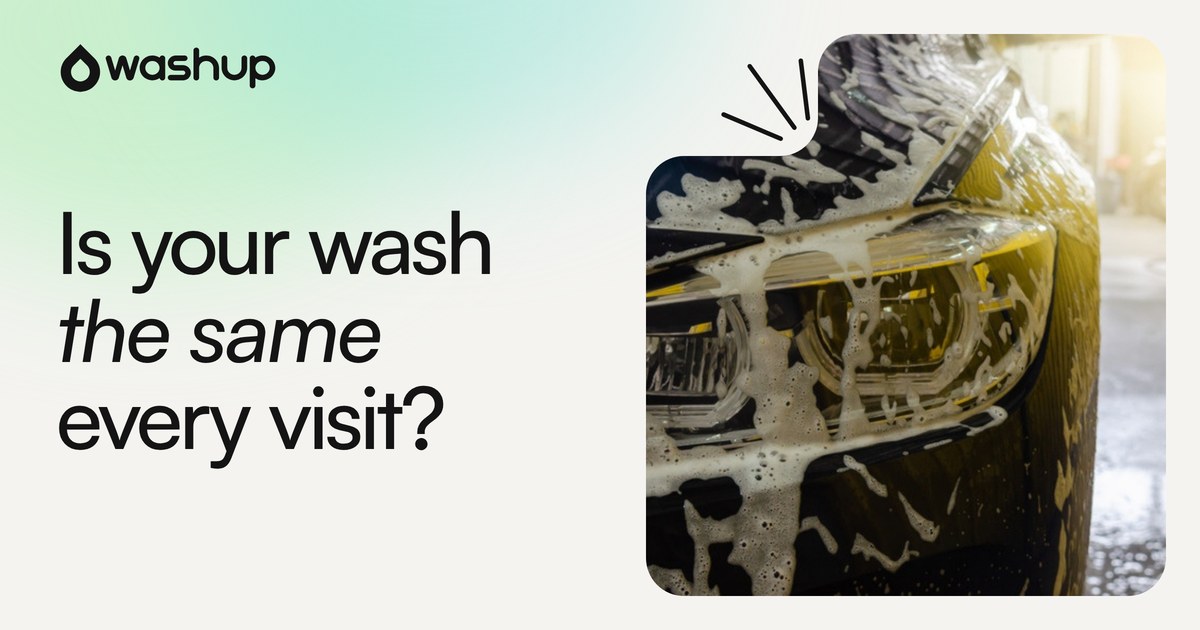
Car wash quality consistency means every car leaves equally clean, dry and spot-free on every shift, whoever is working. It decides whether members stay. In the ICA’s Pulse survey, 88% of customers named wash quality a top loyalty driver, and 31% of unhappy customers blamed incomplete cleaning for leaving (ICA via Professional Carwashing & Detailing).
One great Saturday doesn’t keep a member. What keeps a member is a wash that’s just as good on a Tuesday morning in March, when your best manager is off and a newer shift lead is running the floor.
Key takeaways
- 88% of car wash customers cite wash quality as a top loyalty driver, ahead of staff friendliness at 71% (ICA Pulse via PC&D).
- Operators estimate 53% of dissatisfied customers come back for a rewash. Only 17% of consumers say they do (ICA CAR WASH Pulse, Q2 2026).
- Monthly membership churn hit 7.9% in Q2 2026, led by voluntary cancellations at 4.9%, up 9.2% year over year (Rinsed via ICA).
- Nearly 79% of customers say they’d accept a price increase, and the ICA ties that to perceived value and wash quality (ICA CAR WASH Pulse, Q1 2026).
What makes a car wash deliver the same quality every visit?
A car wash delivers the same quality every visit when the checks that protect quality happen every shift, not when someone remembers them. That takes a written standard for what a clean car looks like, a daily equipment walk before the first car, one named person for each check, and a fast way to flag and fix what fails.
Equipment matters, and so does crew experience. But most washes that slip have decent equipment and decent people. What they’re missing is a routine that survives a busy Saturday, a call-out, or a manager’s day off.
Why does consistency matter more than one great wash?
Consistency matters because a member judges the membership across dozens of visits, and one bad wash can undo several good ones. A pay-per-wash customer who leaves with a dirty rear end may never come back. A member who gets two in a month starts asking whether the plan is worth it.
Most of those members won’t tell you. In the ICA’s Q2 2026 CAR WASH Pulse, operators estimated that 53% of dissatisfied customers return for a rewash. Only 17% of consumers said they actually do. The rest spot-clean at home, switch washes, or do nothing (ICA via Professional Carwashing & Detailing). A low rewash count doesn’t prove your quality is high.
The cost shows up in churn, the share of members who cancel each month. Rinsed’s Q2 2026 report, built on data from more than 3,000 locations, put total monthly churn at 7.9%, a new high. Voluntary cancellations rose to 4.9%, up 9.2% year over year, while credit card churn fell (Rinsed via ICA). Card declines are a billing problem. Voluntary cancellations are where quality, value and experience show up. For the full breakdown, see why car wash members cancel.
Quality also sets your pricing room. Nearly 79% of customers in the ICA’s Q1 2026 Pulse said they’d be open to a price increase, with that openness tied to perceived value and wash quality (ICA). By Q2 2026, member price satisfaction had dropped to 46%, its lowest point in more than a year (ICA via PC&D). A wash that looks the same every visit has an easier time defending its next price change.
Where does car wash quality slip between shifts?
Car wash quality slips in a handful of predictable places: chemistry that drifts off dilution, nozzles that plug, cloth that wears or picks up grease, conveyor and correlator timing, dryers, and spot-free rinse. None of them fail all at once. They fade a little each day until a member sees it on their car.
Chemistry is the quiet one. Chemical and equipment suppliers interviewed by Professional Carwashing & Detailing name worn tips and injectors, sticking check valves, air leaks, clogged strainers and hydrominder ratio creep as the usual causes of dilution drift. One supplier put it plainly: “Lack of product consistency is the seed for churn to grow” (PC&D).
Cloth is the other. CarWash College’s training guidance is to inspect wrap cloth at the start of every day for missing or worn sections and for oil or grease, then measure penetration: the cloth should reach three to four inches into the vehicle, and under three inches it’s due for replacement (CarWash College via PC&D, undated). Worn cloth cleans less, greasy cloth smears it onto the next car, and short cloth lets the brush core get closer to the paint.
What should a daily car wash quality check cover?
A daily quality check should cover a ghost wash before opening, a test car walked from entrance to exit, the cloth, nozzle and chemical checks, the dryers and spot-free rinse, and a written note of anything that fails. It runs before the first paying car, every day, whoever opens.
Trade guidance agrees on the timing. Professional Carwashing & Detailing’s equipment maintenance checklist, built from interviews with equipment makers, calls for a ghost wash at least 30 minutes before opening, then a check for plugged nozzles on the soaker, foaming arches, wheel cleaner and friction curtains (PC&D, 2018). NCS’s vendor guidance adds a test with a real vehicle and a walk of the tunnel to confirm conveyor timing, brush pressure and soap application (NCS, 2024).
- Ghost wash first. Run every arch and tool with nothing on the belt. Look for full spray coverage and leaks, and listen for anything that sounds wrong.
- Walk a test car. Use a staff car. Follow it through and watch where each tool lands, then look at it at the exit: rear end, rocker panels, wheels, mirrors and glass.
- Check the cloth. Missing strips, grease, and penetration on wraps and mitters.
- Check the chemistry. Barrel levels, pickup lines, and a titration on the products your top package depends on.
- Check the dryers and spot-free rinse. Blower mounts and oscillation, clear intakes, and the RO (reverse osmosis) reading against your normal number.
- Write down what failed and who owns it. A comment in a group text isn’t a record, and it won’t be there tomorrow.
Make every item specific. “Check equipment” gets a checkmark. “Confirm the wheel cleaner arch sprays both sides” gets a look. The wraps and brushes inspection and chemical dispensing systems inspection templates are a good starting point.
How do you keep quality the same when your best manager is off?
You keep quality the same by putting the standard in the routine, not in one person’s head. If your best shift lead is the only one who knows what a clean wheel looks like at the exit, your quality takes the day off when they do.
- Write the standard down. Walk the site with your best lead and record what they check, in order, and what good looks like. Photos help: full foam coverage at the arch, a clean rocker panel at the exit.
- Assign each check to a role. The opener owns the ghost wash and test car. The closer owns barrel levels and filters. “The team” can’t be accountable. A name can.
- Close the loop on failures. Every flagged item needs an owner and a status until it’s fixed. A worn applicator that gets mentioned at shift change and then forgotten turns into a week of dirty rear ends.
- Review the week. Look at what failed, on which shift, and how long it stayed open. The same item failing every Monday is a training or maintenance problem, not bad luck.
Sign-off helps. Brian Epstein, who owned and operated express washes for over 20 years, describes logging every maintenance task at his former sites and having it signed off by the site manager, assistant manager and area manager (PC&D, 2025). That’s more than a single site needs, but the idea scales down: someone checks the checker. More on making lists stick in how checklists improve car wash operations.
Does quality consistency look different at a tunnel, in-bay or self-serve wash?
Yes. The goal is the same at every format, but the failure points differ.
- Express tunnel (a conveyor pulls the car through a line of equipment). The most moving parts and the most cars, so a small problem hits volume fast. Conveyor, correlator, wraps and mitters, arches and blowers get the daily attention.
- In-bay automatic (IBA: the car stays parked and a gantry moves around it). One machine does everything, so a plugged nozzle or a bad positioning read affects every car. Check spray coverage, the stop-and-go signals, and the dryer pass on a test car before opening.
- Self-serve. The customer does the washing, so quality means the bay works the way the sign says: pressure at the wand, a clean foam brush, soap and wax actually flowing, and a clean floor. Nobody’s on site most of the day, so a broken wand can stay broken until someone complains.
For format-specific setups, see the tunnel, in-bay automatic and self-serve examples.
How do you know if your wash quality is slipping?
You know quality is slipping when the same equipment keeps failing checks, rewash requests or complaints cluster on certain shifts, and voluntary cancellations creep up. Watch those numbers weekly, by shift and by location, instead of waiting for reviews.
- Check pass rate. The share of daily checks that pass. A falling inspection pass rate shows up before members feel it.
- Repeat problems. The same applicator or blower flagged three times in a month needs a repair, not another note. Track repeat equipment issues.
- Rewashes and complaints by shift. Given the rewash gap above, treat each one as a stand-in for several customers who didn’t speak up.
- Voluntary cancellations, split from card declines. That’s the part of churn your crew can move.
Downtime is the far end of a quality problem. See the real cost of car wash equipment downtime.
Where WashUp fits
WashUp’s Inspections turns the daily quality walk into a check built for each bay, with your own criteria and a photo of every piece of equipment. Your crew marks each item Green, Yellow or Red. Yellow and Red need a note and become an Attention Item with an owner and a priority until it’s resolved, and subscribed managers get an email or push alert. Readings like PSI, pH or TDS can set the status on their own against thresholds you choose. Link the inspection to a daily task in Tasks with a time window, and you can see from your phone whether the opening check happened before the first car.
Want the same wash on every shift? Book a demo and we’ll set up your first quality inspection with your own equipment. Your first 14 days are free.
Frequently Asked Questions
Sources & Author
- Professional Carwashing & Detailing (Mandy Kaur and Jocelyn Sterns Steingruber, DRB), “Carwash Membership Growth & Churn Reduction Strategies”, undated (2026 issue), citing the ICA Pulse survey.
- Professional Carwashing & Detailing, “International Carwash Association releases Q2 2026 report”, May 29, 2026.
- International Carwash Association, “Rinsed Releases Q2 2026 Quarterly Car Wash Industry Report”, July 22, 2026.
- International Carwash Association, “CAR WASH Pulse Q1 2026: Demand Remains Stable as Price Sensitivity and Market Saturation Shape Industry Outlook”, March 13, 2026.
- Professional Carwashing & Detailing, “Carwash chemical consistency across multiple sites”, undated (2026 issue).
- Professional Carwashing & Detailing (CarWash College, sponsored), “Checking the Cloth on the Wrap Around Washer”, undated.
- Professional Carwashing & Detailing (Kristen Corbisiero), “Carwash equipment maintenance checklist”, March 5, 2018.
- NCS National Carwash Solutions (vendor guidance), “Maintaining Car Wash Tunnel Equipment: 15 Tips”, May 7, 2024.
- Professional Carwashing & Detailing (Brian Epstein), “Express Carwash Equipment Maintenance Tips”, September 25, 2025.