Going Digital: Replacing Paper in Car Wash Operations





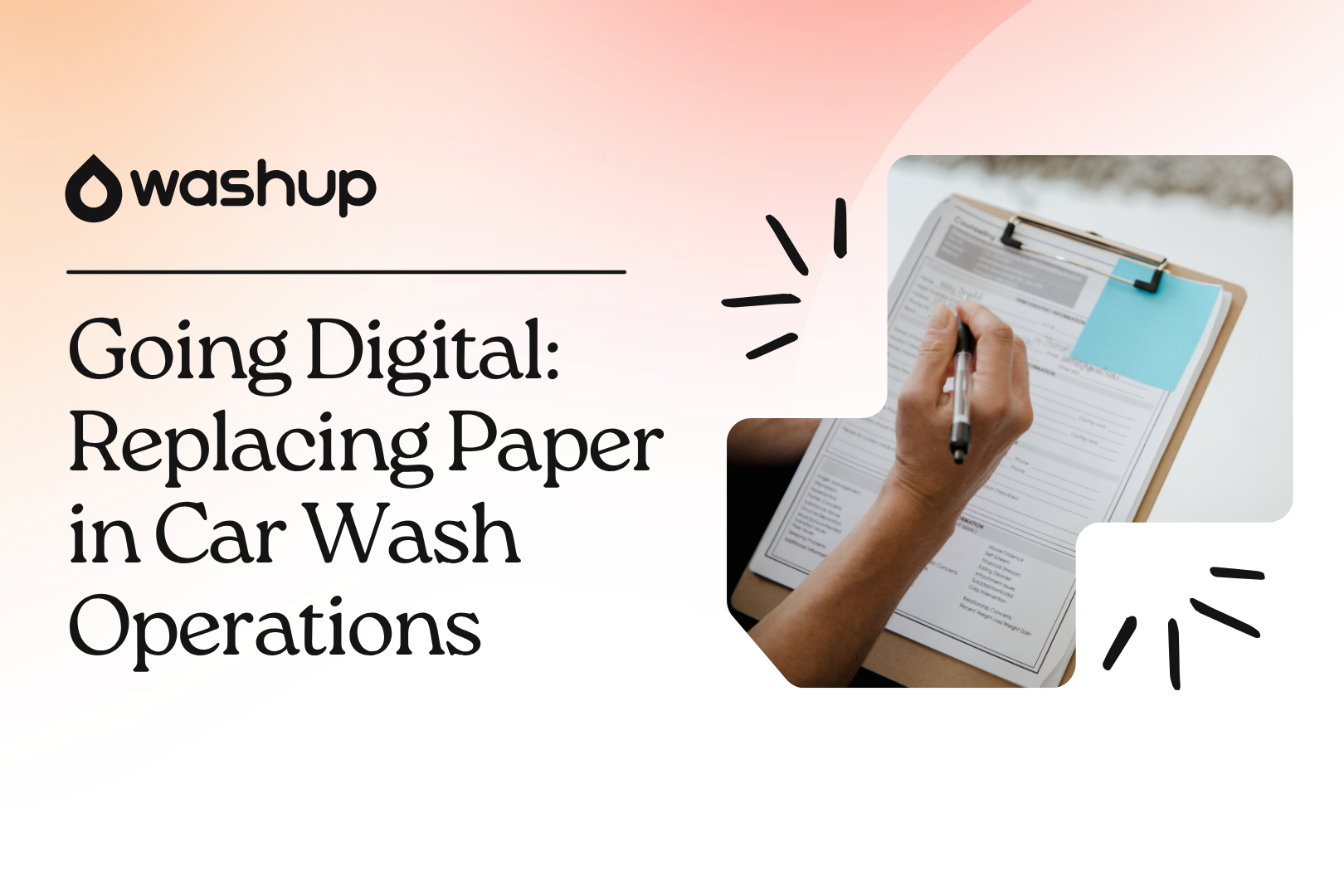
Walk into the back office of many car washes and you'll find the same setup: a clipboard on the wall, a printed checklist, maybe a whiteboard with some notes, and a stack of paper incident reports in a folder somewhere. It works — until it doesn't.
The move to digital operations isn't about adopting technology for its own sake. It's about solving real problems that paper-based systems genuinely can't solve.
How Much of Operations Is Still Paper-Based?
A 2024 survey by Deep Analysis, M-Files, and AIIM found that over 45% of business processes across industries are still paper-based. In the service industry, that number is likely higher. A similar Forbes/Infrrd analysis found that nearly 48% of companies still rely on spreadsheets or manual data entry for critical operational processes.
This isn't a judgment — it's context. Paper has worked for a long time. But it has limitations that are hard to ignore when you're trying to run a consistent operation, especially across more than one location.
What Paper Can't Do
It can't show you real-time status. A completed paper checklist tells you what happened — if it was filled out honestly and returned. A digital checklist tells you what's happening right now, with timestamps and completion records.
It can't send notifications. When a task goes past due or an inspection item gets flagged as critical, a clipboard doesn't do anything with that information. The right people find out when they happen to look, or when it's too late.
It can't be accessed remotely. If you're not on-site, a paper log doesn't help you. Digital records are accessible from anywhere — your phone, your tablet, your laptop — whether you're at the wash or not.
It doesn't build a history automatically. Filing and organizing paper records takes effort and doesn't scale. Digital records accumulate automatically and are searchable when you need to look something up.
It can't be standardized across locations. You can print the same checklist and post it at every location — but you can't verify that it's being used the same way everywhere.
The Productivity Argument
Research from Time Etc found that small business owners spend an average of 16 hours per week on administrative tasks — roughly a third of their work week. In a car wash context, that admin load often includes chasing down completed inspection forms, following up on maintenance schedules, reconciling incident reports, and figuring out who did what and when.
Digital systems reduce that load significantly. When task completion is logged automatically, maintenance records update themselves, and incident reports are filed and stored in one place, the time spent reconstructing information drops.
Gartner research (via OpenText) found that in 70% of surveyed organizations, simplifying workflows and reducing manual processes was the top technology priority — and IDC estimates that companies can reduce operational costs by 20 to 30% through strategic digitization of key processes.
It Doesn't Have to Be a Big Change
The most common concern about going digital is that it's complicated or disruptive. In practice, the transition is usually faster than operators expect — particularly when the digital system mirrors the workflows the team already knows.
The goal isn't to change how your wash operates. It's to give the operations you already have a better backbone — one that tracks what's happening, alerts the right people when something needs attention, and gives you visibility from wherever you are.
Operators who have made the transition consistently report that the biggest benefit isn't the fancy features — it's the simple relief of knowing things are getting done without having to check in personally on every task.
The Right Starting Point
The easiest place to start is usually daily checklists. Taking the paper opening and closing lists that already exist and moving them into a digital format changes the workflow very little for the team — they're doing the same tasks — but changes everything for the manager. Completion becomes visible. Gaps become auditable. The record exists whether or not someone filed the paper correctly.
From there, maintenance schedules and inspection processes are natural next steps — and each one adds another layer of operational visibility that paper simply can't provide.
Frequently Asked Questions
Sources: Deep Analysis / M-Files / AIIM joint survey, 2024 (paper-based processes); Forbes / Infrrd, 2025 (spreadsheet reliance); Time Etc survey, 2023 (admin time); IDC (via Docsumo, digital transformation statistics); Gartner / OpenText (via Digital Adoption, 2024).
Related Articles & Resources
→ How Checklists Improve Car Wash Operations
→ Article 36: How to Reduce Administrative Work at a Car Wash